

Quick Answer: When patients ask me about a deep plane facelift vs mini facelift, I explain that the right choice depends on their facial anatomy, degree of aging, and desired results. A mini facelift is often best for mild jowling and early skin laxity, while a deep plane facelift provides more comprehensive, longer-lasting rejuvenation of the cheeks, jawline, and neck.
Have you ever looked in the mirror and wished you could refresh your appearance without looking like you’ve had “work done”? It’s a concern I hear often from patients. Today’s facelift techniques are designed to create natural-looking results, and two of the most common options are the mini facelift and the deep plane facelift.
When comparing a deep plane facelift vs mini facelift, the right choice depends on your anatomy, the degree of facial aging, and the type of result you want. A mini facelift may be suitable for early jowling and mild skin laxity, while a deep plane facelift is generally better for more advanced aging and more comprehensive rejuvenation of the face and neck.
Deep Plane Facelift vs. Mini Facelift: A Quick Comparison
| Feature | Mini Facelift | Deep Plane Facelift |
|---|---|---|
| Best for | Early to moderate aging, mild jowling, and slight skin laxity | Moderate to advanced aging, sagging cheeks, deeper folds, and neck laxity |
| Areas treated | Mainly the lower face and jawline | Cheeks, midface, jawline, and neck |
| Surgical approach | Tightens more superficial tissues through smaller incisions | Repositions deeper facial tissues beneath the SMAS |
| Results | Subtle, natural-looking improvement | More comprehensive and transformative rejuvenation |
| Recovery time | Usually about 7–10 days | Usually about 2–3 weeks |
| Longevity | Approximately 5–7 years | Approximately 10–15 years |
| Scarring | Shorter incisions, usually around the ears | Incisions around the ears and natural skin creases |
| Main advantage | Less invasive with a quicker recovery | Longer-lasting correction with greater lifting |
| Main limitation | Less effective for advanced facial aging | More extensive surgery with a longer recovery |
Key Takeaways: Mini Facelift vs. Deep Plane Facelift
- The right procedure depends on your facial anatomy, degree of aging, recovery preferences, and aesthetic goals.
- A mini facelift is best suited for early signs of aging, such as mild jowling and skin laxity along the lower face.
- A deep plane facelift addresses more advanced aging in the cheeks, midface, jawline, and neck.
- Mini facelifts use smaller incisions and generally involve a shorter, easier recovery.
- Deep plane facelifts reposition deeper facial tissues, creating more comprehensive and longer-lasting results.
Which Areas of the Face Does Each Facelift Treat?
Mini Facelift
I typically recommend a mini facelift for early aging in the lower face, including:
- Mild jowling
- Early lower-cheek sagging
- Minor jawline laxity
It uses smaller incisions and offers subtle improvement with a shorter recovery.
Deep Plane Facelift
I may recommend a deep plane facelift for more advanced aging affecting:
- The cheeks and midface
- Deeper facial folds
- The jawline and neck
This technique repositions deeper tissues for more comprehensive, longer-lasting rejuvenation.
How Are the Procedures Performed?
Deep Plane Facelift Technique
During a deep plane facelift, I work beneath the SMAS layer, releasing supporting ligaments and repositioning the deeper tissues as one unit. This allows me to lift the cheeks, jawline, and neck without relying on excessive skin tension.
Mini Facelift Technique
A mini facelift uses shorter incisions around the ears and involves more limited tissue adjustment. I tighten the superficial tissues of the lower face and jawline, making it a less extensive procedure than a deep plane facelift.
Mini Facelift vs. Deep Plane Facelift Scars
Mini Facelift Scars
A mini facelift typically uses shorter incisions placed around the ears and, when needed, along the hairline. Because the procedure treats a smaller area, the scars are generally shorter and easier to conceal.
- Often fades discreetly over time
- Shorter incisions
- Usually limited to the ears and hairline
- Smaller overall scar length
Deep Plane Facelift Scars
A deep plane facelift may require longer incisions because it addresses the cheeks, jawline, and neck. I carefully place these incisions around the ears, hairline, and natural skin creases to help keep the scars well hidden.
- Designed to treat a larger area Can still heal discreetly with proper placement and aftercare
- Longer incisions than a mini facelift May extend behind the ears and into the hairline


Secure Your Safe Procedure Experience with Dr. Hojjat
Join our satisfied clients who’ve experienced safe, effective treatments.
Ideal Candidates for Each Facelift
Mini Facelift Candidates
I typically recommend a mini facelift for patients with early signs of aging who want a subtle improvement and shorter recovery. It is best suited for concerns that are mainly limited to the lower face and jawline.
- Realistic expectations
- Mild jowling
- Early lower-face laxity
- Good skin elasticity
- Preference for less downtime
Deep Plane Facelift Candidates
I may recommend a deep plane facelift for patients with more advanced facial aging who need greater lifting across the cheeks, jawline, and neck. Candidates should be healthy enough for surgery and comfortable with a longer recovery.
- Desire for longer-lasting correction
- Sagging cheeks or midface
- Deeper facial folds
- More noticeable jowling
- Loose skin in the neck
Recovery Time and Aftercare
Recovery experiences vary significantly between a deep plane facelift and a mini facelift, largely due to the invasiveness of each technique. Understanding what to expect after surgery helps patients plan accordingly and follow post-operative instructions that support optimal healing. From downtime to follow-up care, each approach has its own timeline and aftercare requirements that can influence a patient’s decision.
Deep Plane Facelift Recovery
Recovery from a deep plane facelift typically takes around two to three weeks, with swelling and bruising most noticeable during the first 10 days. Patients are usually advised to take at least two weeks off from work or social events. Because the surgery involves deeper tissue layers, aftercare includes diligent monitoring, limited physical activity, and follow-up visits to ensure proper healing. Though recovery is longer than a mini facelift, the results justify the downtime with more significant and enduring facial rejuvenation.
Mini Facelift Recovery
Recovery from a mini facelift is generally quicker and more comfortable than recovery from deeper facelift procedures, making mini facelift recovery appealing for patients seeking minimal downtime. Most patients return to normal activities within 7 to 10 days, with only mild swelling and bruising. The limited tissue disruption reduces the need for extensive aftercare, though proper rest and following post-op instructions are still essential. Compared to the deeper dissection required in a deep plane facelift or even a full facelift, this procedure offers a smoother recovery process while still delivering visible, if more modest, aesthetic improvement.
Risks and Potential Complications
Every surgical procedure comes with some level of risk, and facelifts are no exception. While both deep plane and mini facelifts are considered safe when performed by a qualified surgeon, they differ in terms of complexity, invasiveness, and potential complications. Understanding these risks is key to making an informed decision, taking steps to prevent facelift complications, and feeling confident in your surgical journey.
Deep Plane Facelift Risks
Because of its complexity and the depth of tissue manipulation, a deep plane facelift carries a higher risk profile than less invasive procedures. Potential complications include hematoma, nerve injury, infection, and prolonged swelling or bruising. Temporary numbness is also common. Although rare, facial nerve damage is a more serious concern. The extensive nature of the surgery requires a skilled surgeon to minimize these risks. Compared to a mini facelift, the deep plane approach demands greater surgical expertise and postoperative care.
Mini Facelift Risks
While a mini facelift is less invasive, it still carries some risks, though generally fewer than those associated with deeper procedures. Common complications may include bruising, swelling, infection, or minor scarring around the incision sites. Temporary numbness or tightness can occur but typically resolves within a few weeks. Because the mini facelift involves less dissection, the risk of nerve damage is lower compared to the deep plane facelift. Overall, it’s considered a safer option for patients with mild aging concerns.
Impact on Your Face’s Skin and Longevity
One of the most important factors to make the right choice between facelift techniques is how the results will look over time. Both deep plane and mini facelifts aim to restore youthful contours, but they differ in the degree of skin tightening, volume repositioning, and durability of results. This section explores how each procedure affects facial appearance long-term and what patients can realistically expect in terms of skin quality and aging progression.
Deep Plane Facelift Results
Deep plane facelifts deliver some of the most natural and long-lasting results in facial rejuvenation surgery. Because the technique repositions deeper facial structures, it restores youthful volume and contours without creating a tight or overstretched appearance. Patients often enjoy results that last 10 to 15 years, with a smoother transition as the face continues to age. Compared to mini facelifts, the deep plane approach provides more comprehensive and durable enhancements across the cheeks, jawline, and neck.
Mini Facelift Results
Mini facelift results are typically more subtle and short-term compared to those from a deep plane facelift. By focusing on tightening superficial tissues, the mini facelift smooths out early signs of aging, particularly along the jawline. While it can provide a refreshed and more youthful appearance, the effects tend to last around 5 to 7 years. The skin may continue to loosen with age, and touch-up procedures might be needed sooner. However, the outcome is still impactful for the right candidate.
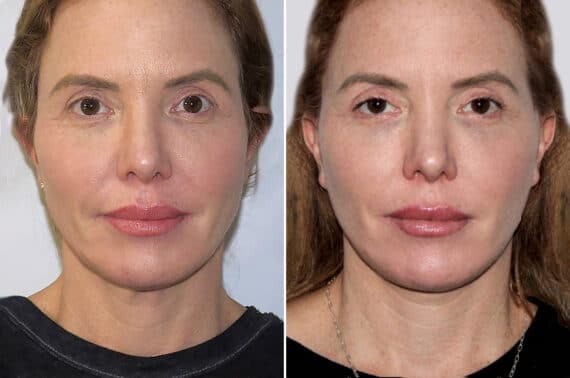
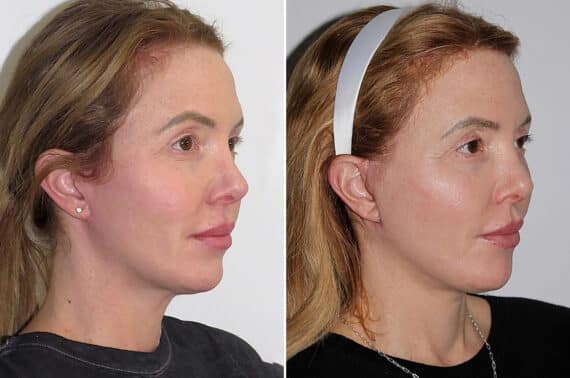
Schedule Your Facelift Consultation Today
No matter which facelift approach you’re considering, selecting a highly experienced surgeon makes all the difference in achieving safe, natural-looking results. The complexity of facial anatomy, especially in deep plane procedures, demands precision, advanced technique, and an artistic eye to preserve and enhance your unique features.
Dr. Homer Hojjat is a double-board-certified facial plastic surgeon and a member of the CSFPS, focusing exclusively on face and neck cosmetic procedures as well as reconstructive surgery, from facelift and eyelid surgery to brow lift and neck lift procedures. With a strong academic background, including published research on medical treatment efficiency and public perception of facial plastic surgery, Dr. Hojjat offers the perfect combination of technical skill and modern aesthetic vision. Call us today at 949-996-3274 or visit our contact page to schedule your consultation.
Frequently Asked Questions About Mini Facelift and Deep Plane Facelift
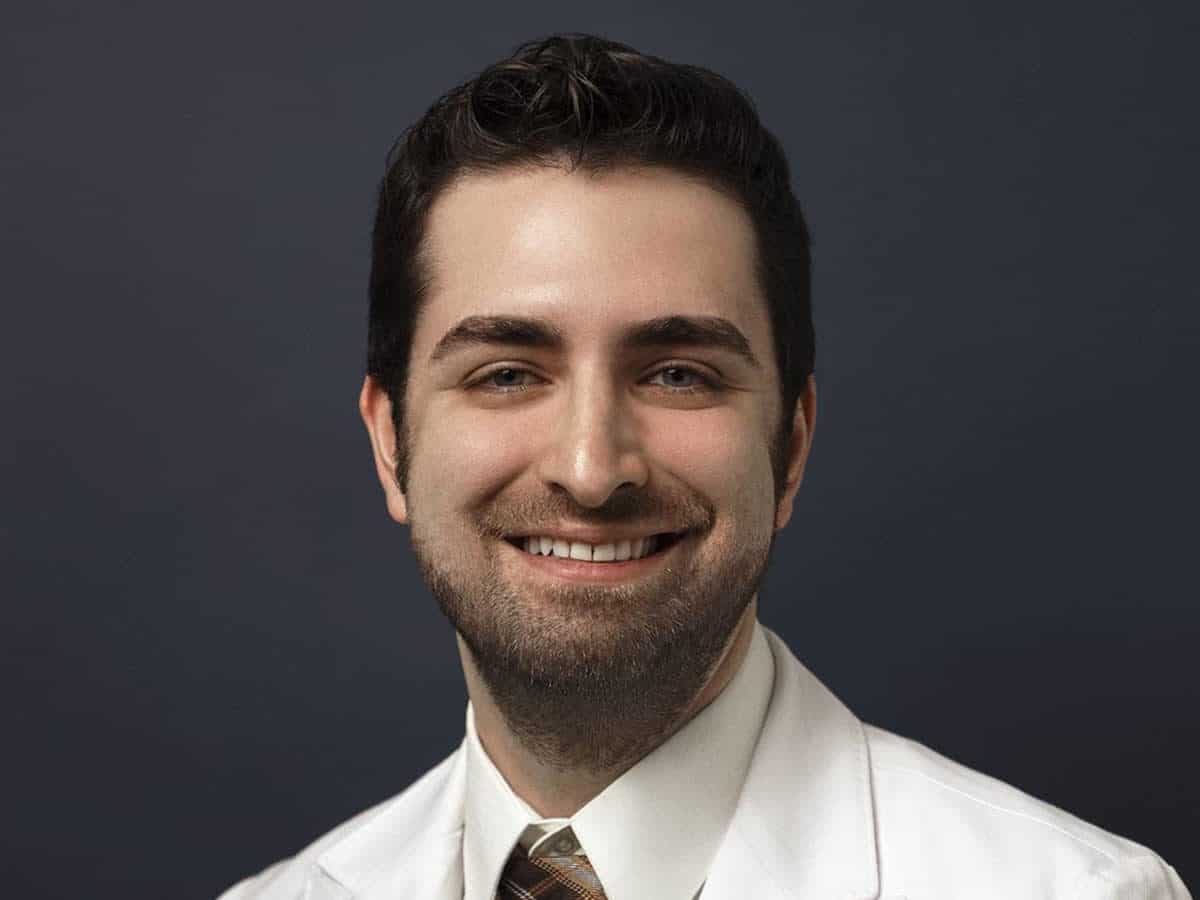
WRITTEN AND REVIEWED BY DR. HOMER HOJJAT, MD
Double-Board-Certified Facial Plastic Surgeon at SoCal Aesthetic Surgery
Dr. Homer Hojjat is a double-board-certified facial plastic surgeon and founder of SoCal Aesthetic Surgery in Irvine, CA. A summa cum laude graduate of UCLA, Dr. Hojjat completed his residency at Wayne State University and advanced fellowship training at Premier Image and Emory University, bringing a precision-focused approach to facial rejuvenation and non-surgical treatments.
Dr. Hojjat’s Credentials Include:
- Board Certified — Facial Plastic & Reconstructive Surgery
- Board Certified — Otolaryngology–Head & Neck Surgery
- M.D., Summa Cum Laude — University of California, Los Angeles
- Residency Training — Wayne State University
- Advanced Fellowship — Premier Image & Emory University
Expertise Areas:
Facial Plastic Surgery, Botox, Dermal Fillers, Laser Skin Resurfacing, Rhinoplasty, Facelift, Brow Lift.