
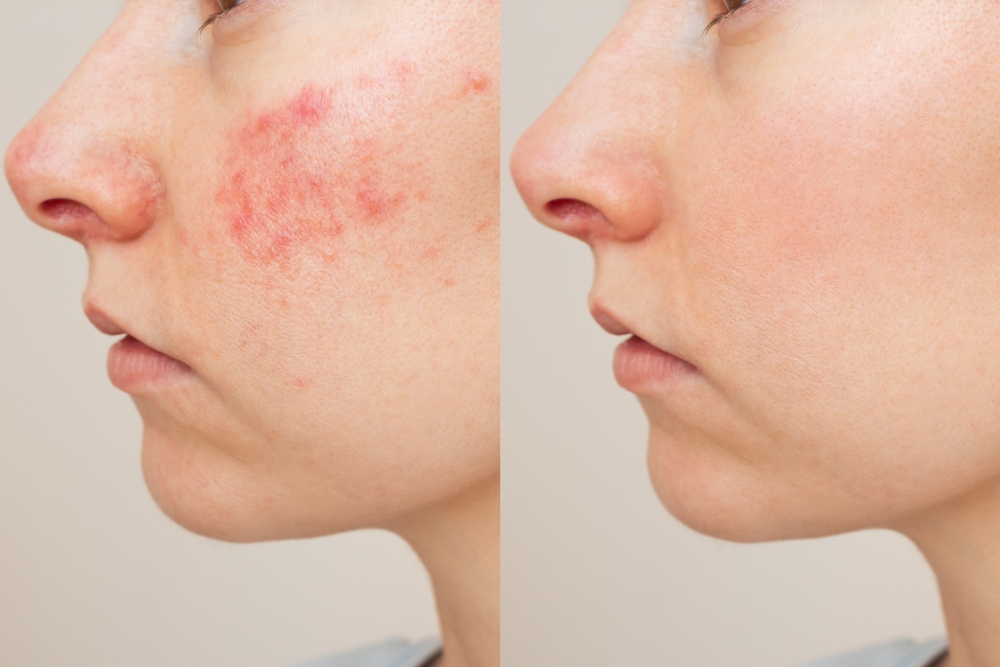
Healing after laser skin resurfacing can seem uncertain at first glance. On the one hand, it’s a non-surgical laser treatment that stimulates skin renewal without incisions, which might suggest an easy recovery.
On the other hand, more intensive resurfacing lasers such as ablative CO2 or erbium devices remove layers of damaged skin and trigger deeper collagen remodeling, which can require several weeks of healing. The laser skin resurfacing healing process varies not only by the type of laser used—whether deeper ablative resurfacing or gentler, non-ablative treatment—but also by your skin’s baseline condition, how your body responds to treatment, and how closely you follow post-procedure care.
At his Irvine, CA practice, Dr. Homer Hojjat regularly guides patients through each phase of laser skin resurfacing recovery. With careful treatment planning and clear post-procedure instructions, patients are better prepared for what will happen at each stage of healing and for the gradual improvements that follow.
Why Healing After Laser Skin Resurfacing Matters for Your Final Results
Laser resurfacing is designed to improve skin texture, tone, and signs of sun damage by triggering controlled injury and renewal. How your skin heals directly affects the quality of your results and how long those improvements last.
How the Healing Process Affects Skin Quality and Appearance
During recovery, the skin rebuilds its protective barrier and begins collagen remodeling beneath the surface. This process influences smoothness, clarity, and the appearance of wrinkles or scars. Following recovery guidelines—especially gentle skincare and sun protection—supports healthy skin renewal.
What Most Patients Worry About Before Treatment
Common concerns include redness, swelling and discomfort, peeling, and how long it will take to return to normal routines. Clear expectations help patients recognize normal healing signs and avoid unnecessary worry.
What Happens to Your Skin Right After Laser Skin Resurfacing
Laser treatment works by removing or heating targeted layers of skin, depending on the type of laser used, such as CO2 laser resurfacing or erbium laser resurfacing.
The First 24 Hours After Laser Skin Resurfacing
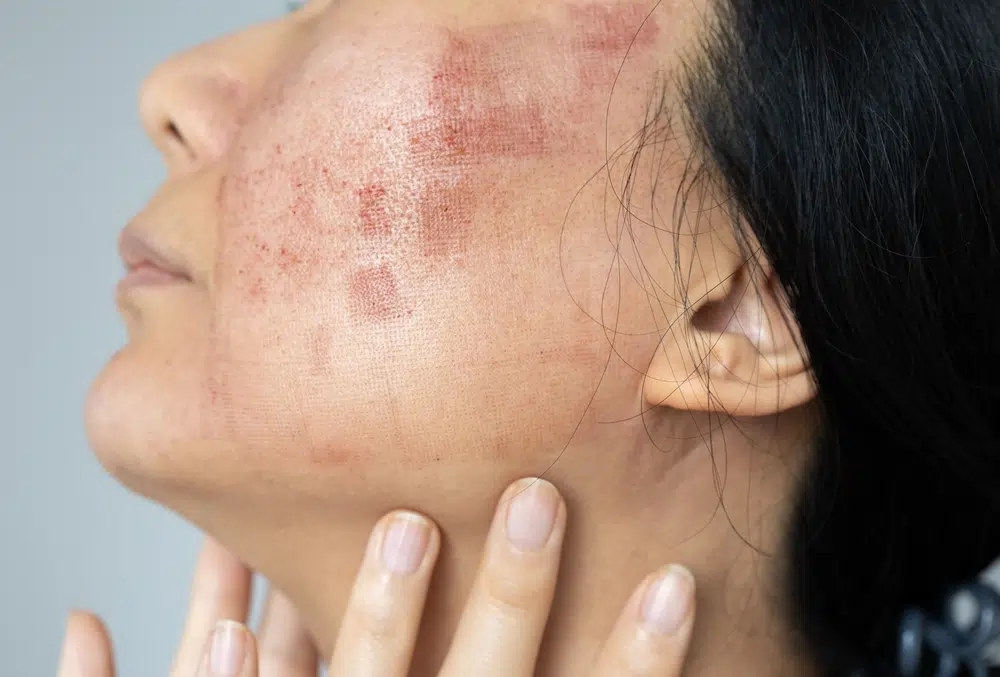
Immediately after treatment, the treatment area may feel warm, tight, or similar to a sunburn. Redness and swelling are common. Specific aftercare instructions are provided by the surgical team, including guidance on ice packs and protective ointments or dressings.
Normal Side Effects: Redness, Warmth, and Swelling
These early side effects are expected after laser skin resurfacing and vary based on the type of laser used, treatment depth, and individual skin type. Keeping the skin well moisturized and avoiding sun exposure during this stage supports comfort and healthy healing.
The Early Healing Phase After Laser Skin Resurfacing: Days 1 to 3
This phase is often the most noticeable and requires careful skincare.
Skin Sensitivity, Tightness, and Redness Explained
As the skin begins to heal, sensitivity and tightness are common. Gentle cleansing and frequent moisturizer use help reduce discomfort. Avoid retinoids, exfoliants, and fragranced products during this stage.
What Peeling and Flaking Usually Look Like
Peeling or flaking may occur as damaged skin sheds. This is a normal part of recovery. Picking or scrubbing should be avoided to reduce the risk of scars or hyperpigmentation.


Secure Your Safe Procedure Experience with Dr. Hojjat
Join our satisfied clients who’ve experienced safe, effective treatments.
The Mid-Healing Phase After Laser Skin Resurfacing: Days 4 to 7
By this stage, new skin begins to surface.
How Skin Starts Renewing Itself
Fresh skin appears underneath as peeling subsides. Redness may persist but usually feels less intense. Gentle skincare remains important, and sunscreen becomes essential if you’re outdoors.
Changes in Redness, Texture, and Comfort Level
Texture often feels smoother, though color may still appear pink. Makeup may be allowed at this point if approved by the surgical team and applied gently.
The Late Healing Phase After Laser Skin Resurfacing: Weeks 2 to 4
Healing continues beneath the surface even as the skin looks more settled.
When Skin Tone Evens Out and Redness Fades
Redness gradually fades over several weeks after treatment. Patients typically feel more comfortable resuming social and professional activities during this period.
When Patients Return to Normal Routines
Most daily routines can be resumed, but sun protection remains critical. Tanning and prolonged sun exposure should be avoided to protect results and reduce the risk of hyperpigmentation.
Long-Term Healing and Skin Improvement After Laser Resurfacing
While the surface heals first, deeper changes take longer.
How Collagen Rebuilding Continues Under the Skin
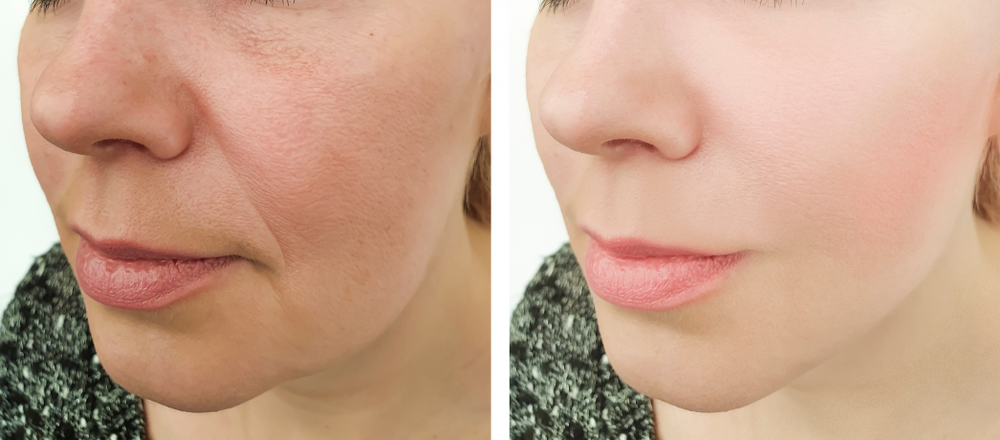
Collagen remodeling continues for months after laser resurfacing. This process supports ongoing improvement in skin texture, firmness, and the appearance of fine lines or acne scars.
When Most Patients Notice Smoother, Brighter Skin
Many patients see gradual improvements over several weeks, with continued refinement over time. Results depend on laser type, treatment depth, and adherence to post-treatment tips.
What Is Normal vs. Not During Laser Skin Resurfacing Healing
Knowing what’s expected helps patients respond appropriately during recovery.
Common Healing Signs That Are Expected
Redness, mild swelling, peeling, dryness, and sensitivity are normal during the recovery period. Temporary darkening or lightening of the skin can also occur, especially in patients prone to pigment changes.
When It May Be Time to Check In With Your Provider
Increasing pain, worsening redness, unusual discharge, fever, or concerns such as reactivation of herpes or cold sores should prompt a call to the surgical team.
How Dr. Homer Hojjat Supports Laser Skin Resurfacing Recovery in Irvine, CA
Dr. Hojjat is a board-certified plastic surgeon who approaches laser resurfacing with careful patient selection, personalized treatment planning, and structured follow-up care.
Personalized Treatment Planning and Follow-Up Care
Each laser treatment plan considers skin type, concerns, and recovery goals. Patients receive detailed instructions for cleansing, moisturizing, sun protection, and activity modifications throughout healing.
Why Expert Guidance Makes Healing More Manageable
Clear expectations and access to guidance help patients feel supported at every stage. Knowing what’s normal—and what isn’t—reduces anxiety and supports better outcomes.
Is Laser Skin Resurfacing Right for Your Skin Goals?
Laser resurfacing can be effective for wrinkles, sun damage, uneven texture, and certain scars, but it’s not the right choice for everyone.
Who Tends to Benefit Most From This Treatment
Patients seeking noticeable improvement in skin quality who can commit to proper recovery and sun protection often see the most benefit. Skin type and lifestyle factors are part of candidacy.
Questions Patients Often Ask During Research
Patients commonly ask about downtime, types of lasers, expected recovery, and how to maintain results long term. A consultation provides personalized answers based on your skin.
Schedule a Laser Skin Resurfacing Consultation With Dr. Homer Hojjat in Irvine, CA
Understanding the laser skin resurfacing healing process helps you prepare for treatment and recovery with confidence. A consultation allows Dr. Hojjat to evaluate your skin, discuss options, and outline a recovery plan tailored to your goals.
Patients in Irvine, California, considering laser skin resurfacing can schedule a consultation to learn whether this procedure aligns with their skin goals and lifestyle.